

The online gambling industry has changed more in the last five years than it did in the previous twenty. Traditional casino brands that once depended on expensive in-house platforms, dedicated server infrastructure, and large technical departments are increasingly switching to cloud-based systems. This transition is often described as Casino-as-a-Service, or CaaS — a model where the core technology behind an online casino is provided as a scalable service rather than developed from scratch.
The idea is similar to what happened in streaming, e-commerce, and financial technology. Companies no longer want to spend years building complex infrastructure when flexible cloud platforms can deliver payment systems, game integration, player management, security tools, analytics, and compliance modules almost instantly. For gambling operators, this approach changes the economics of the entire business.
The rise of Casino-as-a-Service is not only about saving money. It also reflects the growing expectations of players. Modern users want instant loading speeds, smooth mobile gameplay, personalized bonuses, fast withdrawals, live dealer experiences, and uninterrupted access from multiple devices. Traditional infrastructure struggles to handle this level of demand, especially during peak traffic periods like major sports tournaments or large jackpot campaigns.
At the same time, regulators across Europe, Latin America, and parts of Asia are introducing stricter licensing and security requirements. Cloud-based casino systems help operators adapt more quickly because updates, compliance tools, and fraud prevention systems can be deployed centrally without rebuilding the platform every few months. This is why many new casino brands entering the market today are not technology companies in the classic sense. They are marketing and product companies operating on top of sophisticated cloud ecosystems.
How casino-as-a-service changes the gambling business
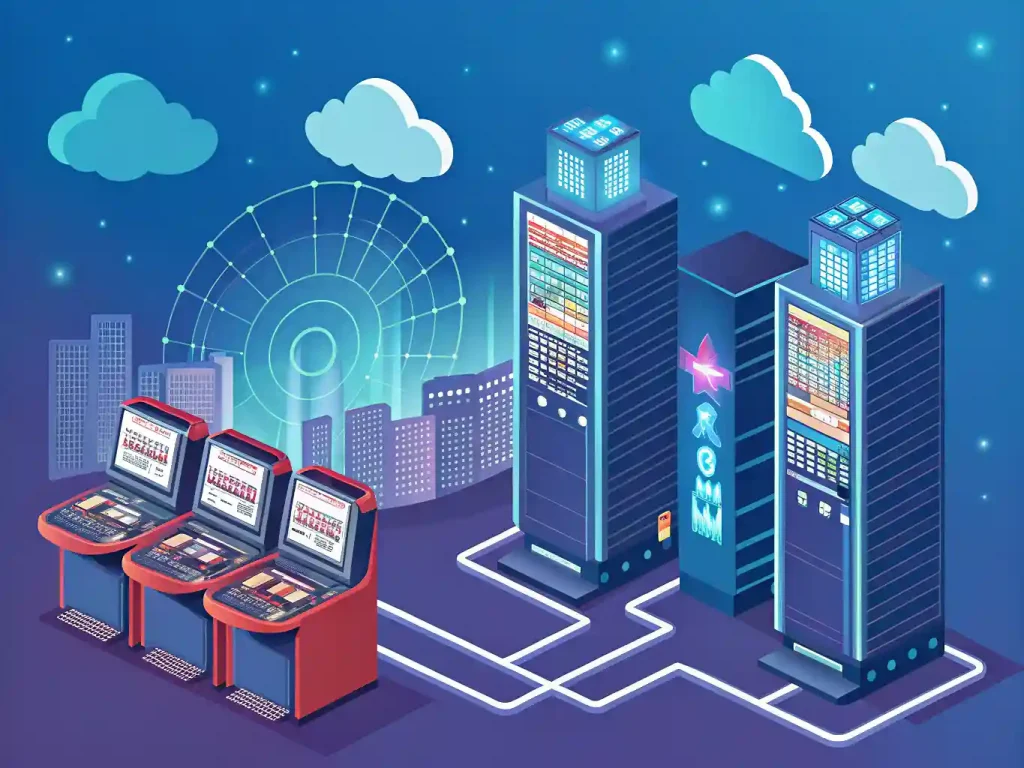
A decade ago, launching an online casino required enormous investment. Operators needed developers, payment specialists, cybersecurity teams, server administrators, customer support systems, licensing consultants, and partnerships with multiple software providers. Even medium-sized projects could take years before going live.
Casino-as-a-Service completely changes that process. Instead of building everything internally, operators subscribe to ready-made cloud infrastructure that already includes the technical foundation. The casino owner focuses on branding, promotions, partnerships, localization, and player acquisition while the backend infrastructure is maintained by specialized providers.
This shift resembles what Shopify did for e-commerce. Thousands of stores can operate independently while relying on the same technological backbone. In gambling, companies like SoftSwiss, White Hat Gaming, EveryMatrix, Pragmatic Solutions, and Gaming Innovation Group became key examples of this transformation. Their platforms allow casino brands to launch quickly while integrating hundreds or even thousands of games from different studios.
Many modern casinos that appear to be fully independent actually run on shared cloud architecture. The differences are visible in branding, loyalty systems, interface design, and promotional mechanics, but the core operational engine is often supplied by a third-party cloud platform.
Several advantages explain why operators increasingly prefer this model:
• Faster market entry with lower development costs.
• Easier integration of games, payment systems, and compliance tools.
• Better scalability during traffic spikes and tournament periods.
• Continuous security updates managed by specialized teams.
• Improved mobile optimization across devices and regions.
This model also benefits software providers themselves. Instead of selling one-time licenses, they create long-term recurring revenue streams through subscription agreements, transaction fees, and managed services. The result is a more predictable business ecosystem for both sides.
The influence of cloud infrastructure becomes especially visible during major events. When international football tournaments or global esports competitions attract millions of players simultaneously, cloud systems automatically allocate additional computing resources. Traditional hosting environments would often experience crashes or payment delays under similar pressure.
Why players are indirectly driving the cloud transition
Many gamblers do not realize they are already using cloud-powered casino ecosystems every day. Yet player behavior is one of the biggest reasons behind the industry’s migration toward Casino-as-a-Service.
Modern users expect online casinos to function like premium entertainment platforms rather than static gambling websites. Streaming culture, mobile gaming habits, and social media have raised expectations dramatically. Players want instant registration, seamless navigation, personalized recommendations, and synchronized progress across devices.
A cloud environment supports these demands far better than isolated legacy systems. Data processing becomes faster, content delivery networks reduce latency, and real-time analytics allow casinos to react to player activity immediately. This creates smoother gameplay experiences and more dynamic promotional systems.
The live casino segment demonstrates this particularly well. Platforms like Evolution Gaming and Playtech rely heavily on cloud-connected infrastructure to deliver high-definition streaming, multilingual tables, real-time interaction, and adaptive performance for players across different countries. Without scalable cloud architecture, maintaining stable live dealer sessions for thousands of concurrent users would be far more difficult.
The same applies to modern sportsbook-casino hybrids such as Bet365, Stake, or 1xBet. These platforms combine sports betting, live casino content, slots, esports, and crypto payments inside one ecosystem. The amount of data processing required is enormous. Cloud infrastructure allows operators to unify all these systems while keeping response times fast.
Before looking at some notable examples, it helps to compare how traditional casino infrastructure differs from Casino-as-a-Service solutions.
| Feature | Traditional casino platform | Casino-as-a-Service platform |
|---|---|---|
| Launch time | 1–3 years | Several weeks or months |
| Infrastructure costs | Very high | Subscription-based |
| Scalability | Limited | Dynamic cloud scaling |
| Security updates | Internal responsibility | Managed centrally |
| Game integration | Slow and manual | Automated API integration |
| Mobile optimization | Often inconsistent | Built into the platform |
| Regional expansion | Complex | Easier localization support |
| Compliance adaptation | Time-consuming | Faster centralized updates |
The comparison shows why even established operators are gradually modernizing their systems. Cloud infrastructure does not simply reduce technical pressure — it allows companies to respond faster to market trends and player expectations.
This flexibility becomes increasingly important in regions where gambling markets evolve quickly. Latin America, Africa, and parts of Southeast Asia are seeing rapid growth in mobile-first gambling audiences. Operators entering these regions need platforms capable of supporting multiple currencies, localized payment systems, language adaptation, and regional regulations without rebuilding their entire infrastructure.
Examples of cloud-driven online casinos
Some of the most recognizable casino brands today are deeply connected to cloud-based ecosystems, even if players rarely notice the technical side behind the interface.
Stake is one of the strongest modern examples. The platform grew rapidly thanks to its crypto-first model, live streaming partnerships, and mobile-focused design. Its infrastructure relies heavily on scalable backend systems capable of processing crypto transactions, live betting activity, and real-time promotional mechanics simultaneously. During major sporting events or influencer-driven campaigns, player traffic can increase dramatically within minutes. Cloud scalability helps maintain platform stability during those spikes.
Another important example is LeoVegas. The company positioned itself early as a mobile-first casino brand, which required flexible infrastructure optimized for smartphone users rather than desktop traffic. Cloud-based systems allowed the operator to personalize content, automate CRM campaigns, and maintain consistent performance across different regions.
Casumo also illustrates how Casino-as-a-Service changes business strategy. Instead of investing heavily in proprietary infrastructure from the beginning, the company focused on branding, gamification, and player retention while relying on sophisticated backend technology providers. This helped the brand expand quickly across European markets.
White Hat Gaming became one of the most influential B2B providers supporting this ecosystem. Many casino brands operate on its cloud-based platform while presenting themselves as fully independent operators. White Hat supplies payment processing, player management, security systems, and regulatory compliance tools while casino owners focus on marketing and acquisition.
The crypto casino segment depends on cloud technology even more heavily because blockchain gambling environments generate large amounts of real-time transactional data. Platforms such as Rollbit and BC.Game combine traditional casino mechanics with crypto wallets, NFT integrations, and instant payout systems. These functions require flexible infrastructure that can scale rapidly without interrupting gameplay.
A major reason for this transition is the changing nature of player acquisition. Modern casinos are increasingly connected to Twitch, YouTube, Telegram, Discord, and influencer ecosystems. Viral campaigns can bring enormous traffic surges within hours. Cloud infrastructure gives operators the ability to absorb those surges without risking outages or payment failures.
The role of artificial intelligence and automation
Casino-as-a-Service is closely connected to another major industry trend: artificial intelligence. Cloud infrastructure creates the environment necessary for AI systems to operate efficiently because large-scale data analysis requires significant computing power.
Online casinos already use machine learning algorithms for several operational tasks:
• Detecting fraudulent behavior and suspicious payment patterns.
• Personalizing bonuses based on user activity and retention models.
• Predicting churn risk among high-value players.
• Optimizing sportsbook odds in real time.
• Automating customer support through AI-driven chat systems.
These systems work far more effectively inside centralized cloud environments where data from multiple regions and user groups can be processed continuously.
Recommendation engines have become particularly important. Modern casinos increasingly behave like streaming platforms, suggesting games based on user preferences and historical behavior. Slot recommendations, tournament invitations, and targeted promotions are often generated automatically through AI-driven systems connected to cloud databases.
Responsible gambling systems are also evolving through automation. AI tools can identify risky behavioral patterns, detect unusual deposit activity, or flag excessive session lengths. Regulators in several European jurisdictions now expect operators to implement proactive monitoring tools, which further increases the importance of scalable cloud environments.
Another major trend is the growing use of modular architecture. Instead of operating one monolithic casino platform, many companies use microservices connected through APIs. Payment processing, identity verification, game aggregation, analytics, loyalty systems, and customer support can all operate independently while communicating through cloud infrastructure.
This modular structure allows operators to adapt quickly. If a payment provider becomes unavailable in a specific country, casinos can replace it rapidly without rebuilding the entire platform. If a new slot provider becomes popular, integration may take days instead of months.
The competitive landscape is becoming increasingly technology-driven. Casino brands that fail to modernize risk slower loading speeds, weaker personalization, limited regional scalability, and reduced flexibility in regulatory adaptation.
Why regulation is accelerating the move to the cloud
Regulation often appears to slow innovation in gambling, but in reality it is pushing the industry toward cloud infrastructure even faster.
Modern gambling compliance is extremely demanding. Operators must handle identity verification, anti-money laundering procedures, transaction monitoring, responsible gambling controls, encrypted payment processing, and detailed reporting requirements. Maintaining these systems internally is expensive and operationally complex.
Cloud-based Casino-as-a-Service platforms simplify this process because compliance tools can be updated centrally across multiple operators at once. When regulatory changes occur in markets like the UK, Sweden, Germany, or Ontario, platform providers can deploy updates more efficiently than individual operators managing isolated infrastructure.
This becomes especially valuable for companies operating internationally. A single casino brand may serve players across dozens of jurisdictions, each with different tax structures, bonus restrictions, verification standards, and advertising rules. Cloud ecosystems help standardize operations while allowing regional customization where needed.
Cybersecurity is another important factor. Gambling platforms process large volumes of financial and personal data, making them attractive targets for cyberattacks. Specialized cloud providers often maintain stronger security systems than smaller independent operators could realistically build on their own.
The rise of cryptocurrency gambling also increases technical complexity. Blockchain transactions, wallet integrations, smart contract functionality, and decentralized payment mechanisms require scalable backend systems with high availability. Cloud infrastructure provides the flexibility necessary for these environments to operate smoothly.
At the same time, regulators themselves are becoming more technologically sophisticated. Many jurisdictions now expect real-time reporting, automated monitoring, and stronger data transparency. Legacy infrastructure struggles to support these demands efficiently.
What the future of cloud gambling may look like
The transition toward Casino-as-a-Service is still in its relatively early stages. Over the next decade, the distinction between technology providers and casino brands may become even less visible to ordinary players.
Many future gambling platforms will likely function as entertainment ecosystems rather than standalone casinos. Sports betting, live streaming, social gaming, cryptocurrency services, esports, fantasy sports, and online casinos are gradually merging into unified digital environments powered by cloud infrastructure.
Artificial intelligence will probably become far more visible in player experiences. Personalized interfaces, adaptive loyalty programs, real-time content recommendations, and AI-generated promotions are already emerging across major platforms. As computing power expands, these systems will become more sophisticated and predictive.
Cross-platform synchronization is expected to improve as well. Players may move seamlessly between mobile devices, desktop platforms, smart TVs, VR environments, and even metaverse-style gambling experiences without losing session continuity. Cloud architecture makes this technically achievable.
Virtual reality casinos represent another area where scalable infrastructure will matter enormously. Real-time rendering, live interaction, multiplayer environments, and streaming technology require powerful backend systems capable of handling large simultaneous audiences. While VR gambling is still niche today, many operators are already experimenting with immersive environments.
The business side of the industry will likely become even more centralized around major platform providers. Smaller operators may increasingly act as marketing brands layered on top of shared cloud infrastructure. The competitive edge will shift away from raw technical ownership and toward brand identity, community building, localization, and customer experience.
Players may never think about servers, APIs, or cloud architecture while spinning slots or watching live roulette tables. Yet almost every major trend shaping modern gambling — mobile growth, crypto casinos, AI personalization, live streaming, global scalability, and rapid market expansion — depends heavily on cloud technology operating behind the scenes.
Casino-as-a-Service is no longer a niche technical concept. It has become one of the defining business models of the modern gambling industry, quietly transforming how casinos are built, managed, scaled, and experienced around the world.