
Game development in Eastern Europe has become one of the most dynamic segments of the global entertainment industry. Once overlooked, the region is now home to major studios, ambitious indie developers, and thriving outsourcing ecosystems. Countries such as Poland, Czechia, Romania, Ukraine, and Serbia have transformed from low-cost outsourcing destinations into full-fledged innovation hubs.
Understanding how this transformation occurred and what lies ahead offers valuable insight into the region’s growing global influence.
The Rise of Game Studios Across Eastern Europe
The early 2000s marked the beginning of a quiet revolution. As Western companies searched for affordable yet skilled labor, Eastern Europe presented itself as an ideal partner. Local developers quickly gained experience working on large international projects. Over time, these teams evolved into independent studios capable of producing their own successful titles.
Poland’s CD Projekt Red became the flagship of this transformation with The Witcher series and Cyberpunk 2077. Similar stories unfolded across the region: Bohemia Interactive in the Czech Republic, Ubisoft Kyiv, People Can Fly, and 11 bit studios reshaped global expectations of what Eastern European developers could achieve. The result is a thriving mix of AAA studios, mid-sized developers, and experimental indie collectives.
The cultural and historical background of Eastern Europe also played a key role. Years of limited access to Western media inspired creativity and independence. Developers often built their own engines, tools, and storytelling approaches, fostering originality that appealed to global audiences. Governments, recognizing the potential of digital industries, started supporting game development through tax incentives and educational programs.
Economic and Technological Foundations
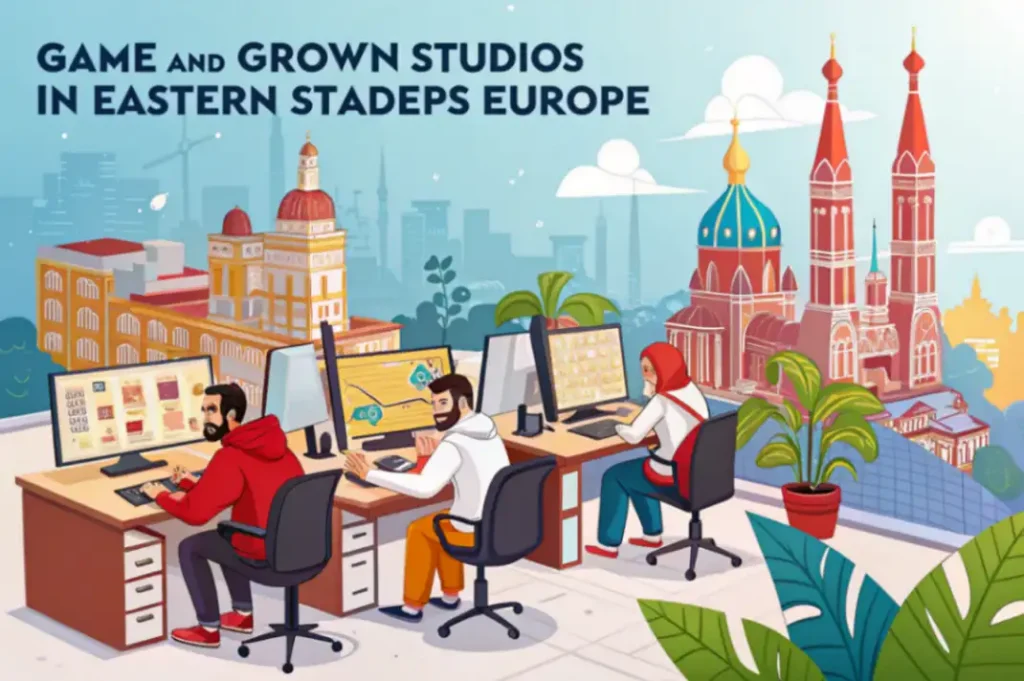
Eastern Europe’s success in game development stems not only from talent but also from its cost-effective and adaptable production model. Lower living costs allow studios to maintain smaller budgets while delivering high-quality results. Additionally, the expansion of broadband internet and advanced software infrastructure created the technical foundation for remote collaboration and global partnerships.
At the same time, universities in Poland, Romania, and Ukraine began to introduce game design and programming courses. This steady flow of young professionals fueled the local ecosystem. Furthermore, many developers who started in outsourcing companies later founded their own startups, creating a virtuous cycle of skill transfer and innovation.
To illustrate the evolution of the region’s gaming industry, consider the following key aspects before and after its transformation:
| Period | Characteristics | Impact on Game Development |
|---|---|---|
| 1990s | Limited funding, small local teams | Emergence of first independent games |
| 2000s | Outsourcing boom, Western partnerships | Skill accumulation, global exposure |
| 2010s | Rise of original IPs, government support | Global recognition, creative diversity |
| 2020s | Established hubs, investor interest | Sustainable growth and innovation |
This shift from contract work to creative leadership demonstrates how Eastern Europe has built a resilient and self-sufficient ecosystem.
Collaboration, Community, and Creative Independence
Another essential factor in the region’s rise has been the formation of strong professional communities. Local developers, once isolated, began organizing conferences, hackathons, and online forums. Events such as Game Industry Conference (GIC) in Poznań or DevGAMM in Kyiv became key networking platforms connecting regional talent with international publishers and investors.
These gatherings not only fostered collaboration but also promoted an entrepreneurial mindset. Developers exchanged experiences, shared resources, and discussed strategies for publishing, monetization, and marketing. As a result, the region now boasts a vibrant indie scene that complements its larger studios.
Community-driven growth has also encouraged diversity in game genres and themes. Eastern European titles often reflect complex narratives rooted in history, folklore, and moral dilemmas—elements that resonate deeply with both local and international players.
Below are several factors that continue to shape the region’s creative independence:
Cultural authenticity: Developers draw from rich local myths, historical events, and emotional storytelling.
Technical flexibility: Teams often combine traditional software with custom-built tools.
Collaborative networks: Informal partnerships between studios, universities, and freelancers strengthen innovation.
Export-oriented mindset: Most projects target global audiences from day one.
Adaptability: Developers are accustomed to working with limited budgets and shifting market conditions.
Together, these characteristics define the unique creative DNA of Eastern European game development.
Investment, Market Expansion, and Global Recognition
Over the past decade, Eastern Europe has attracted increasing attention from investors, publishers, and global gaming corporations. Several international companies established regional offices or acquired local studios to benefit from the growing talent pool. For instance, Embracer Group, Tencent, and Ubisoft have all expanded their presence in the region.
Investment trends show a clear pattern: studios are no longer valued solely for their outsourcing capacity but for their ability to generate intellectual property and scalable franchises. The combination of technical expertise and narrative originality appeals to investors seeking long-term potential.
Moreover, local markets themselves have expanded. With the rapid growth of digital distribution platforms such as Steam, Epic Games Store, and GOG (originally founded in Poland), regional developers gained direct access to global players without relying heavily on traditional publishers.
As the market matures, several opportunities and challenges are emerging. Developers face increasing competition, demand for live-service models, and the necessity of cross-platform optimization. Yet these challenges also drive innovation, leading to new forms of collaboration and business models.
Future Outlook: Education, Innovation, and Sustainability
The next phase of growth for Eastern European game studios will depend on strategic investments in education, technology, and sustainability. Governments and private organizations are already recognizing this. For example, Poland’s GameINN program provides grants for research and development in gaming technologies, while Romania and Ukraine have launched incubators for indie teams.
Another emerging trend is the integration of artificial intelligence and machine learning into production pipelines. These technologies help automate asset generation, testing, and even narrative design. Studios that adopt them early can significantly boost productivity and creativity.
At the same time, sustainability—both economic and social—has become a major consideration. Developers are exploring healthier workplace cultures, diversity initiatives, and environmental responsibility within production processes.
To better understand the priorities for the next decade, let’s summarize the key directions for Eastern European game development:
Expansion of education programs in universities and online platforms.
Investment in AI and advanced tools to enhance efficiency.
Support for indie developers through incubators and funding initiatives.
Cross-border collaborations between regional studios.
Commitment to sustainable practices within the gaming industry.
These steps will ensure that Eastern Europe not only maintains its global reputation but continues to innovate and influence the next generation of games.
Conclusion: From Regional Talent to Global Powerhouse
Eastern Europe’s journey from small, underfunded teams to a network of world-class game studios is a story of resilience, creativity, and adaptability. What began as an outsourcing market has evolved into a hub of innovation, producing some of the most original and technically advanced titles in modern gaming. The combination of cultural depth, technical expertise, and collaborative spirit ensures that the region’s influence will only grow stronger.
In the years ahead, the key challenge will be sustaining this momentum through investment in people, technology, and education. If current trends continue, Eastern Europe is poised to remain not only a vital contributor to the global gaming industry but also one of its leading creative forces.